


Table 21.3 summarises the properties of the atmosphere and the resulting noise (including also the instrumentation) at both wavelengths.
| Item | Radio mm | Optical |
 |
0.6mm to 1cm | 0.4 to 30  m m |
 |
30 to 450 GHz | 10 to 600 THz |
| Comparison given for |
 mm mm |
 m m |
| Noise sources | background limited | photon limited |
| (gaussian) | (poisson) |
|
| Main instrumental noise | Receiver (thermal) | Detector (read-out) |
| thermal sky emission | ||
| Signal Detection |
 |
photon limited |
| Seeing origin | Variation of W(H O) O) |
Variation of  |
Fried
Parameter  |
 antenna antenna |
 telescope telescope |
| (size of the coherence cell) | ||
Coherence Time  |
several 10 minutes |  10 milli-seconds 10 milli-seconds |
(time to reach
 ) ) |
||
| Equivalent to | Single-speckle | Multi-speckle |
| Atmospheric correction | ||
| Photometry | monitoring of T |
``standard'' photometry technics |
| Seeing | radiometric | tip tilt |
| phase correction | adaptive optics | |
| Phase Calibration | phase referenced | too short |
| on nearby sources | closure phase on dual interferometer | |
| Measurements | complex correlator rates:
 , , |
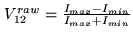 |
complex visibility  |
fringe contrast | |
| Information on |
 & &  |
,
amplitude |
| Imaging | Complex visibilities | Phase retrieval by |
| closure relations | ||
| Algorithms | all standard imaging | + amplitude model fitting |
| in the UV plane |
Note that for
 m, the atmosphere and the
telescope are starting to contribute as main sources of noise
(thermal emission), therefore the noise becomes background
limited.
m, the atmosphere and the
telescope are starting to contribute as main sources of noise
(thermal emission), therefore the noise becomes background
limited.